
The Cost of Truth and Freedom
The HummingbirdThis thematic thread traces Marco’s reflections on perception and responsibility into his fearful projection of a future conflict between truth and unrestricted choice.
increasing Bearing strength in each event
 decreasing
Bearing strength in each eventdecreasingThe Body in a Look
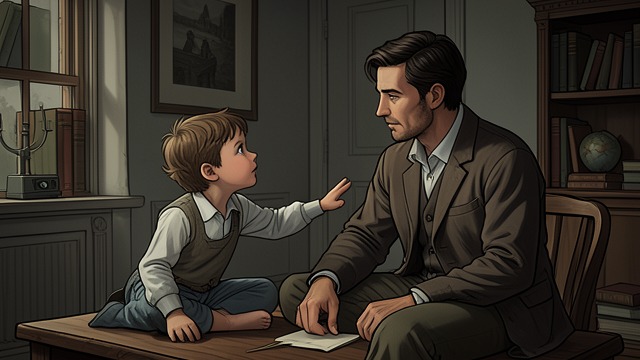
The Body in a Look
Attention as action
Marco reflects on Miraijin’s demand for his gaze and on everyday encounters in which a look can protect, expose, or humiliate someone. Looking, he argues, is not passive: it is a bodily act that affects another person.
Responsibility begins in attention
His examples range from a child seeking recognition to people who cannot return a gaze. A person’s choice to look away can express respect, while the absence of direct attention can distance an actor from responsibility.
The lecture links private intimacy to a broader ethical question about how people see one another.
Machines and Moral Distance
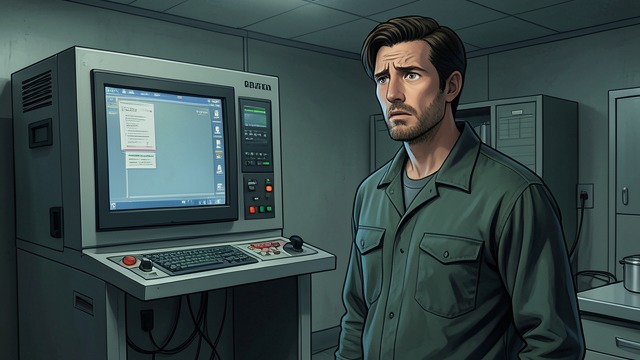
Machines and Moral Distance
Seeing without involvement
Marco contrasts human responsibility with the remote systems that allow people to act without directly seeing those affected. He evokes military targeting to ask what is lost when action no longer requires a human gaze.
A warning about detachment
His argument does not claim that sight alone guarantees justice. Rather, attention can make consequences emotionally present, while a technological or bureaucratic distance can make harm easier to ignore.
The discussion anticipates his later concern that public life may detach freedom from shared responsibility.
A Society Breaking Apart
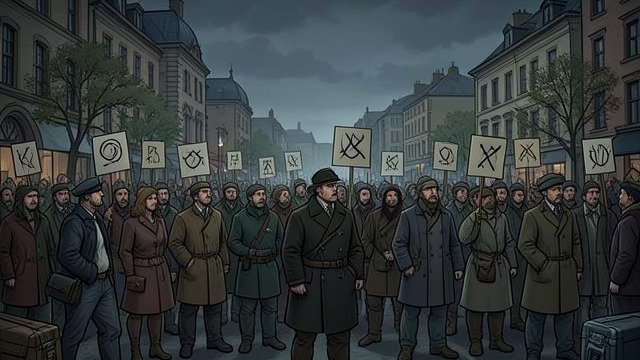
A Society Breaking Apart
Freedom without common ground
Marco imagines a society in which freedom has been fragmented into permission to reject evidence, institutions, science, and obligations to others. The list is deliberately expansive and alarmed.
Truth becomes contested
In his forecast, the struggle is between truth and a version of freedom that treats any restraint as oppression. He expects young people such as Miraijin to defend ordinary care and documented reality.
The projection reflects political fear as much as it predicts events; it is Marco trying to give his granddaughter a role in a world he distrusts.
Miraijin’s Networked Role
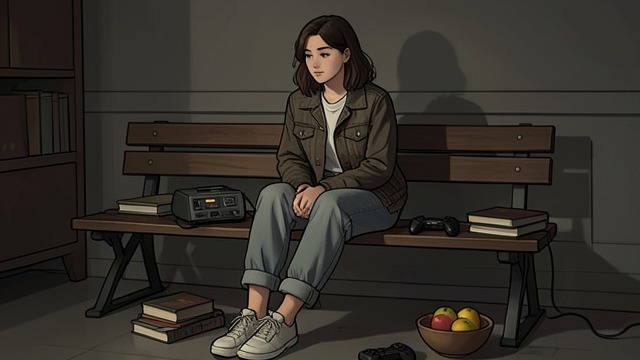
Miraijin’s Networked Role
Influence through example
Marco imagines Miraijin sharing films, books, food, games, and practical ways to respect nature. Her influence begins not as formal authority but as an invitation for young people to imitate her ordinary habits.
Visibility creates danger
Her popularity brings money, attention, and the risk of exploitation. Marco imagines protecting her from commercial pressures so that she can keep communicating without becoming a brand.
The future vision treats public influence as a fragile responsibility rather than a prize in itself.
The Hiding Places
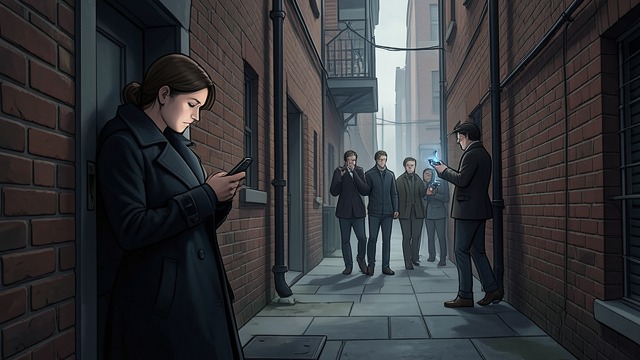
The Hiding Places
A threatened witness
Marco imagines Miraijin forced to leave home and live in secret as her public defense of truth draws threats. Her followers continue to find her through remote communication.
An unfinished outcome
The forecast does not describe a final victory. Instead, young people organize and continue the work of preserving culture and solidarity while the old world declines.
The imagined future expresses hope through collective action, while revealing Marco’s fear that truth-telling may require sacrifice.
2013, while Marco prepares a conference lecture
2013, during Marco’s visual-perception lecture
Marco’s imagined near future, before Miraijin turns nineteen
The imagined 2020s, as Miraijin gains an audience
The imagined years after Miraijin turns nineteen
